SPS Weapons Detector Pilot Questions
Weapons detectors are coming to SPS soon via pilot programs at two high schools: Rainier Beach in South Seattle and Nathan Hale in North Seattle.
Some of the pilot logistics are already clear. The metal detectors (“gates”) are the same ones that have been used recently at SPS football games. Public traffic into the pilot buildings will be limited to one or two gated entrances so that all entrants are screened.
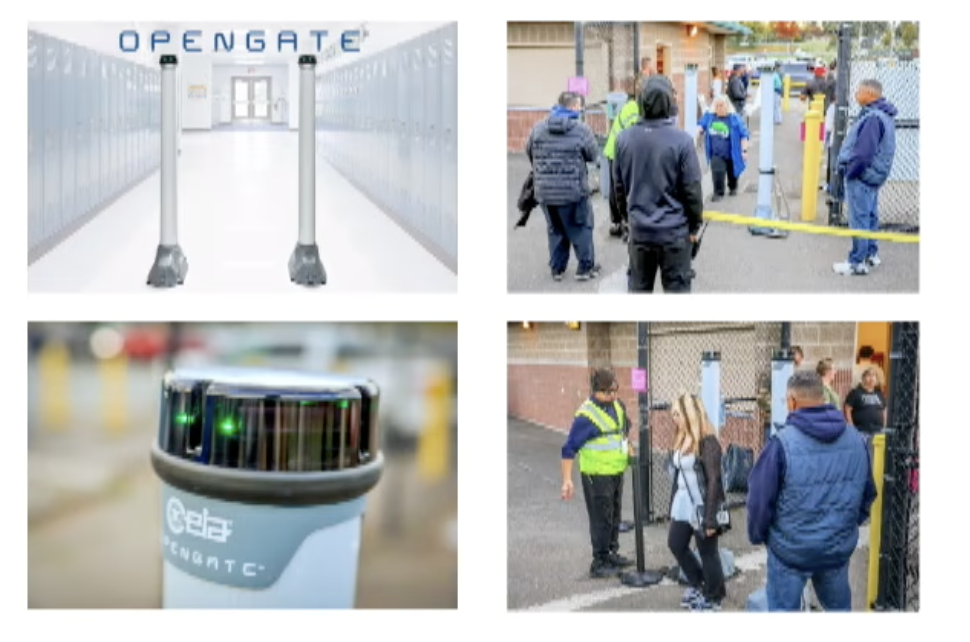
Photo collage of the metal detector gates as presented by Superintendent Shuldiner at the October 7, 2026 board meeting. The photos on the right are the gates in use at a Nathan Hale football game.
My biggest question is one that I’m surprised hasn’t been asked or answered publicly yet:
What happens when the detectors flash red?
Whose job is it to intervene when a suspected weapon is detected? What training do they have on security protocols or de-escalation? Do they have the authority to search students’ clothing? To detain students verbally? Physically?
What (if any) equipment will people in these roles carry? Weapons, restraints, radios, etc.
I assume–but don’t know for certain–that the detectors will be monitored by some kind of school security personnel (as opposed to, say, police officers, or front desk staff, or teachers). Some schools already have such personnel, though presumably their current tasks are worthwhile and can’t be done while monitoring metal detectors.
Discussing this pilot at a board meeting, Superintendent Shuldiner mentioned that laptops are likely to set off the detectors. How is that going to work when virtually every high schooler carries a laptop?! Not to mention flutes, trumpets, robotics projects, etc.
***
I think that there is a version of this pilot that could add a valuable and much-needed layer of security to SPS high schools. I also think there is a version that risks being performative and/or punitive. The devil is in the details.
That’s why I think it’s great that this is being rolled out as a pilot. The district can learn from a pilot and adjust as necessary.
Weapons detectors are controversial at SPS, with strong voices both for and against. No matter what the final district-wide decision is on these, there will be a group of people who need to be brought along. Pilot outcomes, with both data and human stories, are a great way to help build trust and transparency around the final decision.
In that spirit, here are the questions that I hope SPS answers publicly at the end of the weapons detector pilot:
What proportion of screened entries set off the detector? Of those, what proportion get a further intervention like a bag check? To me, these are key measures for distinguishing an effective program from a performative and/or punitive one.
How often are the gates monitored in a way that supports intervention when the detectors are set off? What fraction of people entering the school in a given day pass through unmonitored gates?
What weapons were successfully intercepted during the pilot? What did the interventions look like and how did they end?*
What weapons were missed by the pilot? What did those interventions look like and how did they end? Weapons are often identified through non-technological means like student reporting, so this number would not necessarily be zero.*
How do various discipline rates compare before vs. during the pilot? Is the pilot generating unwarranted disproportionate discipline?
There are other important questions that the pilot needs to answer, too. These have been more widely discussed already in board meetings, so I won’t belabor them here. They include things like:
Efficiency: Will the gates create backups during morning/lunch rushes? Will they cause widespread tardiness?
Sense of safety: Do students feel safer with the program in place? [I’d adjust this to ask which students feel safer with the program in place and which (if any) groups feel less safe because of it?]
Cost: How much does this cost? That includes the gates, which presumably come from the capital budget, and the security staff, who are presumably supported in the operations budget.
Unknowns: What unanticipated behaviors, costs, etc. show up when this is piloted in real SPS high schools? How often might the gates get knocked out of commission by crowds or roughhousing? Is there a sensitivity setting that allows detection of guns but not laptops in the real-world setting? And so on.
I’ve spoken recently with Hale parents who are deeply relieved at what they believe is a first step toward meaningful security. I’ve also spoken with Hale parents who are livid at what they believe is a pointless intervention that will alarm students unnecessarily and make Hale appear as a more dangerous place than it is.
All of these parents are afraid for their kids in some way. I hope this pilot can assuage fears on both sides of the issue by bringing data and a shared experience into the conversation.
FOOTNOTE
*The interception—or lack of detection—of even a single gun during this pilot is the kind of event point that people will seize upon to bolster or cancel the detector project. I think that the program’s value is more nuanced than this data point alone. Ideally, SPS would get messaging out ahead of the pilot’s start that the number of weapons detected or missed is only one piece of the overall picture being developed here.